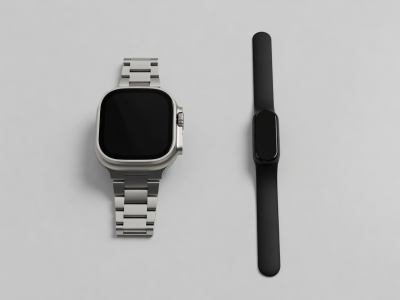
Walking into a consumer electronics store or browsing an online marketplace for a wearable can be an overwhelming experience. The lines between categories have blurred significantly over the past five years. Devices that look like traditional watches now pack serious athletic sensors, and slim bands now display text messages and control smart home devices. However, fundamentally, the market is still divided into two primary categories: the smartwatch and the dedicated fitness tracker.
Understanding the architectural and functional differences between these two categories is essential before investing your money. Choosing the wrong type of device usually results in one of two outcomes: a device that constantly needs charging and is overloaded with unused features, or a device that lacks the specific capabilities you need for your lifestyle.
The Smartwatch Paradigm: An Extension of Your Phone
A true smartwatch is designed to be a surrogate for your smartphone. These devices feature complex operating systems capable of running third-party applications. They prioritize communication, productivity, and lifestyle integrations.
When you opt for a premium smartwatch, you are buying into an ecosystem. You gain the ability to answer phone calls directly from your wrist using a built-in microphone and speaker, reply to messages with full keyboards or voice-to-text, stream music independently via LTE, and pay for groceries using an NFC chip.
However, this computational power comes with a significant trade-off: battery life. The high-resolution OLED displays, constant cellular or Bluetooth communication, and powerful processors mean that most true smartwatches require charging every 24 to 48 hours. If your primary goal includes sleep tracking, finding a window to charge a smartwatch daily can become a logistical annoyance.
The Fitness Tracker Philosophy: Data First
On the other end of the spectrum is the dedicated fitness tracker. Historically, these were simple pedometers, but today's trackers feature biometric sensors that rival their smartwatch cousins. The key difference is intent. A fitness tracker is designed to passively collect health data with minimal interaction required from the user.
Fitness trackers generally utilize proprietary, lightweight operating systems. Because they lack massive app stores, cellular radios, and massive edge-to-edge high-refresh-rate screens, their battery life is often measured in weeks rather than hours. It is common for a mid-tier fitness tracker to last 7 to 14 days on a single charge.
While modern trackers will show you that you have received a text message or a phone call, you generally cannot reply to them in depth. They are designed for quick glances during a workout, not for managing your inbox during a meeting.
Which Should You Choose?
The decision ultimately comes down to your primary motivation for buying a wearable.
- Choose a Smartwatch if: You want to reduce your smartphone screen time without disconnecting entirely. You want to stream music on runs without bringing your phone. You want turn-by-turn navigation on your wrist. You view the device as a lifestyle accessory as much as a fitness tool.
- Choose a Fitness Tracker if: Your primary goals are analyzing sleep, monitoring continuous heart rate, and tracking workout metrics. You despise charging devices daily. You prefer a lightweight, unobtrusive profile that won't get caught on long sleeves or feel heavy during vigorous movement.
It is also worth noting the rise of the "hybrid" category—devices that feature mechanical watch hands but house an e-ink display and biometric sensors underneath. These appeal to those who prefer traditional aesthetics but still want step counts and heart rate monitoring.
Ultimately, the best wearable is the one you actually wear consistently. The most advanced sensor array in the world provides no value if the device is sitting on a charger on your nightstand.