If you have purchased a premium wearable in the last few years, you have likely encountered a metric called HRV, or Heart Rate Variability. Often presented as a mysterious score ranging anywhere from 20 to over 100, it is frequently cited as the ultimate indicator of your recovery, stress levels, and overall autonomic nervous system health. But what exactly is it, and how does your watch measure it?
The Metronome Myth
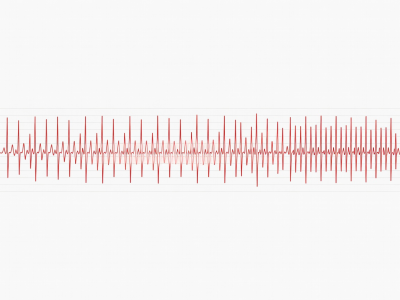
A common misconception is that a healthy heart beats like a metronome. If your heart rate is 60 beats per minute, it is natural to assume that it beats exactly once every single second. In reality, a healthy heart is highly adaptive and variable. The time between successive heartbeats—the R-R intervals—fluctuates by milliseconds.
For example, the interval between your first and second beat might be 0.85 seconds, while the interval between the second and third beat might be 1.12 seconds. This variation is HRV.
The Autonomic Nervous System Tug-of-War
To understand why this variability is a good thing, we must look at the autonomic nervous system (ANS), which controls our involuntary bodily functions. The ANS has two main branches:
- The Sympathetic Nervous System (SNS): Often called the "fight or flight" mechanism. It accelerates your heart rate, increases blood pressure, and prepares your body for action or stress.
- The Parasympathetic Nervous System (PNS): Often called the "rest and digest" mechanism. It slows down the heart rate, lowers blood pressure, and promotes recovery and relaxation.
When you are healthy, well-rested, and relaxed, your PNS is highly active, constantly sending signals to slow the heart down, while the SNS occasionally sends signals to speed it up. This constant "tug-of-war" results in a high variability between beats. Therefore, a high HRV is generally a sign of good fitness and recovery.
Conversely, if you are stressed, overtrained, sick, or sleep-deprived, the sympathetic (stress) system dominates. The heart rate stays elevated and rigid, ready for action, resulting in less variation between beats. A low HRV compared to your baseline usually indicates stress or fatigue.
How Wearables Measure HRV
Most modern wearables measure HRV using Photoplethysmography (PPG). If you flip your watch over, you will see flashing green or red LED lights. These lights shine into your skin, illuminating the capillaries. An optical sensor measures the amount of light reflected back.
As your heart pumps, blood volume in your capillaries expands and contracts. Blood absorbs light, so by measuring the microscopic changes in light reflection, the wearable can detect the exact moment a pulse wave passes by. By calculating the precise time between these pulses, the software derives your HRV.
Actionable Insights from HRV
So, how should you use this data?
If you wake up and your wearable indicates your HRV is significantly lower than your normal baseline, it is a signal from your body that your nervous system is strained. This is the day to skip the high-intensity interval training (HIIT) session and opt for a light walk, yoga, or an extra hour of sleep instead. Consistently low HRV can also be an early indicator of impending illness, often dropping days before you feel physical symptoms.
Conversely, a trending increase in your baseline HRV over several months is one of the strongest indicators that your cardiovascular fitness is improving and your body is adapting positively to your training regimen.